The software restorative reproductive medicine needs.
Already built, being built, or ready to build and integrate. Fifteen products, one connected system. See what each one does below.
The products
Fifteen products, one connected system. Live products link straight to the real thing. Preview products are working demos or mockups, marked with one small badge, nothing else.
Train the clinicians
Courses, live teaching, and every lecture captured for keeps.
Support the clinics
Trained clinicians get working tools and a direct line for help.
Reach the patients
Patients learn their cycles and find their way to trained care.
Measure the work
Training and care are counted as they happen.
Share the evidence
Outcomes become shared knowledge the whole field can cite.
How it connects
The evidence flows back into the courses, so the training gets better every year.
From one chart to field-wide evidence
A patient charts her cycle, in the app or on paper.
A trained clinician reads the chart and finds the underlying problem.
Targeted testing and treatment follow, documented in the clinic platform.
Her outcome is recorded and de-identified.
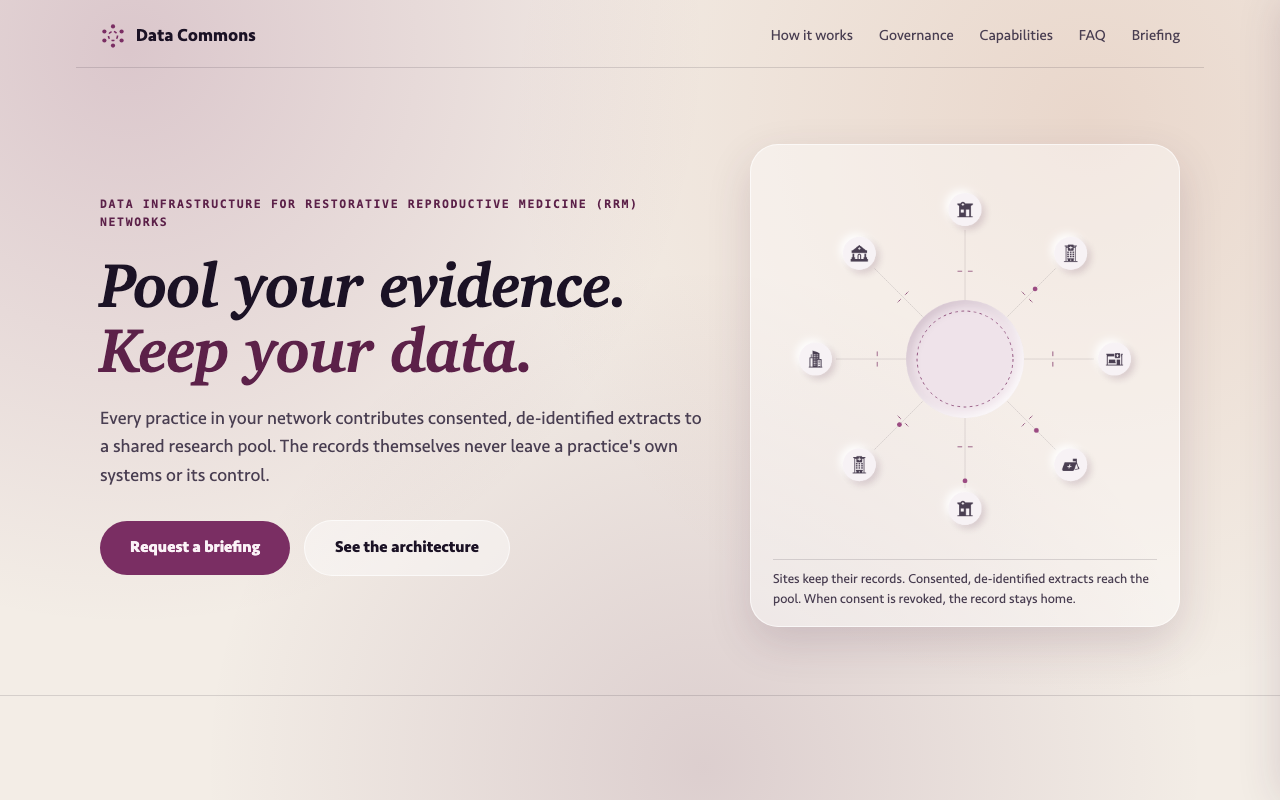
It joins the Data Commons, where it sharpens protocols for every participating clinic.
The evidence compounds fast.
Every clinic that joins starts adding to the shared evidence within months of its first patient, and the answers build year over year.
The evidence carries new subspecialties.
As it grows, it can support focused tracks: restorative surgery, reproductive endocrinology, male factor care, recurrent loss.
What it looks like today
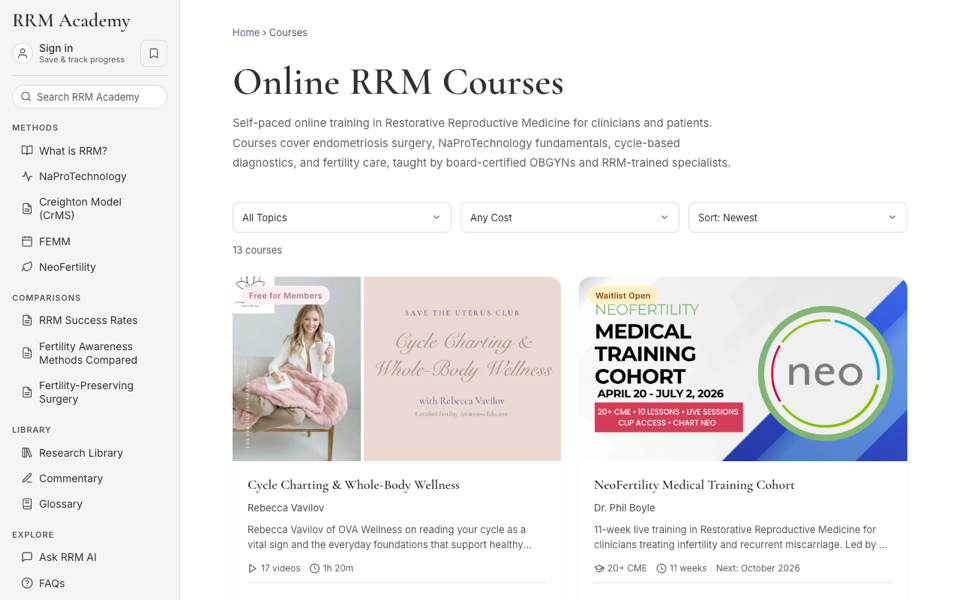
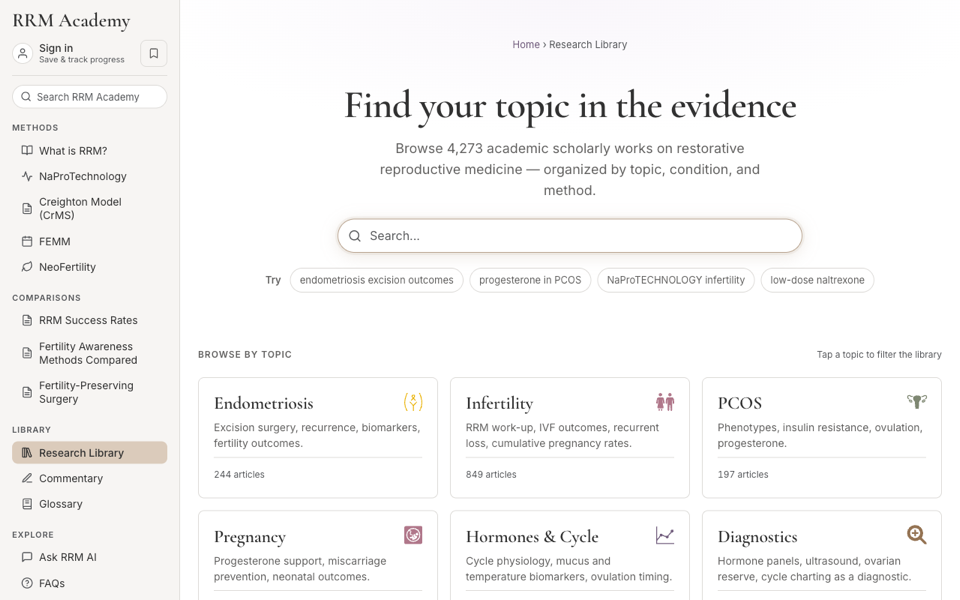
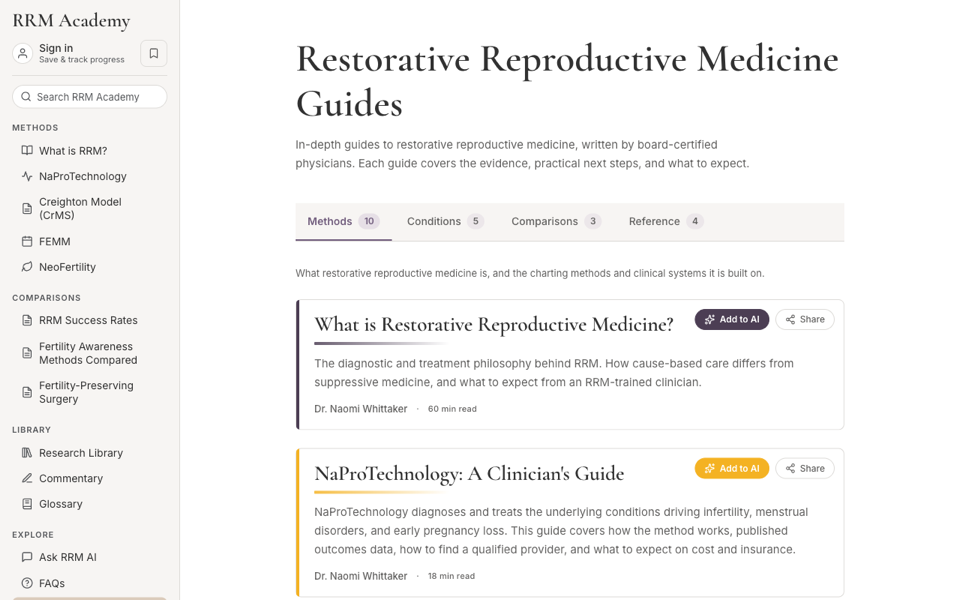
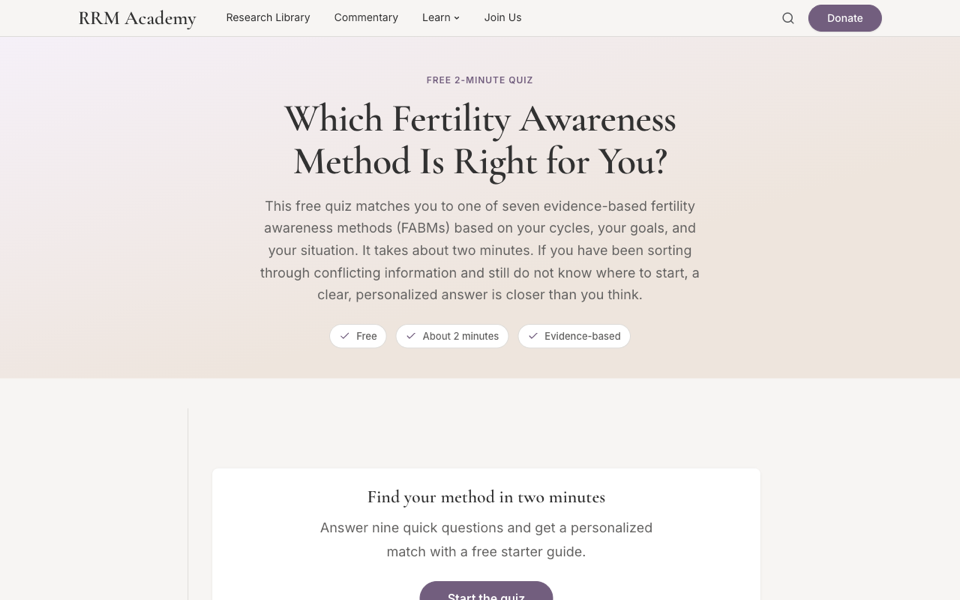
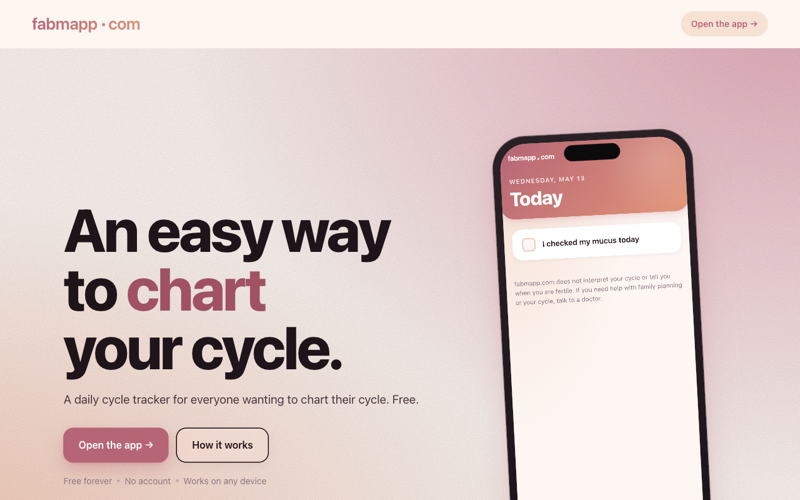
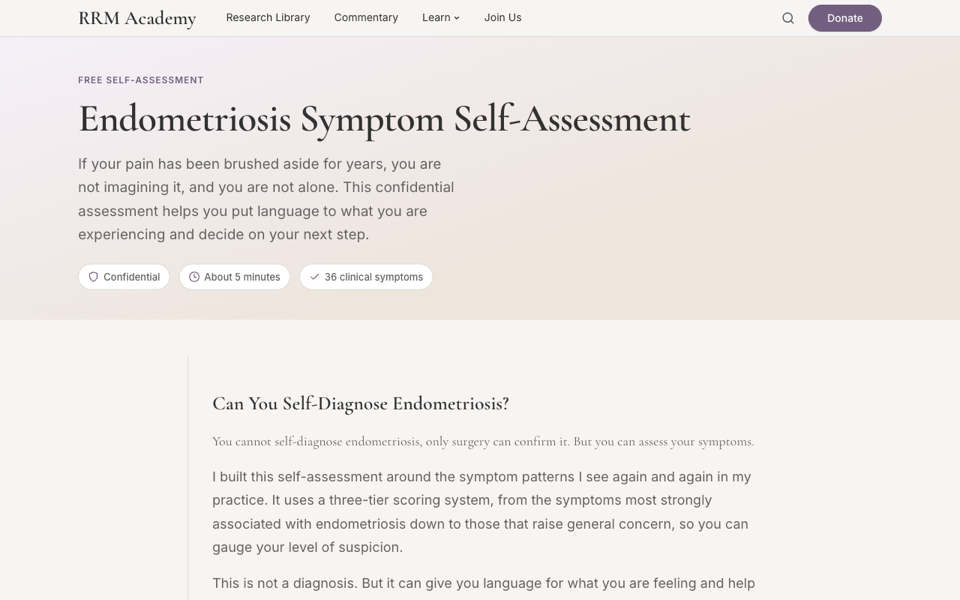
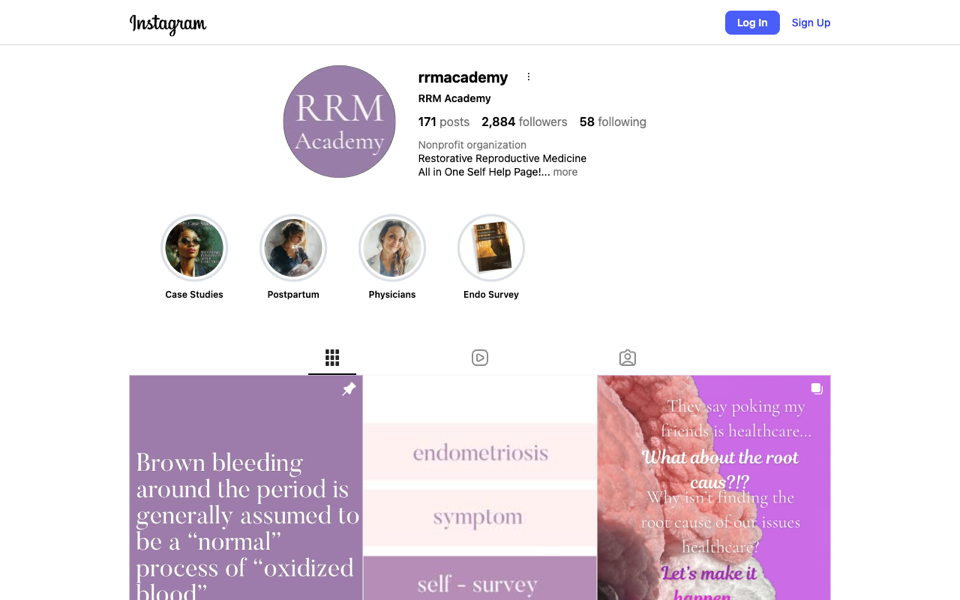
Every Live and Preview product, at full quality. Icons are never a substitute for a real image.





Ten years out
What this connected system builds toward.
Trained care within reach
A woman anywhere in the country can find a trained restorative clinician near her, and her clinic knows exactly who to call.
A field that trains its own
The clinicians trained in the early years are teaching the cohorts that follow.
Subspecialties take root
The training tree grows branches: restorative surgery, reproductive endocrinology, male factor care, recurrent loss.
Evidence at national scale
Hundreds of clinics pooling de-identified outcomes, answering questions no single practice could answer alone.
Body literacy comes first
Patients arrive already fluent in their own cycles, because the education starts before the first appointment.
Faster answers
From clinical question to published answer in years, not decades, because the data is already flowing.